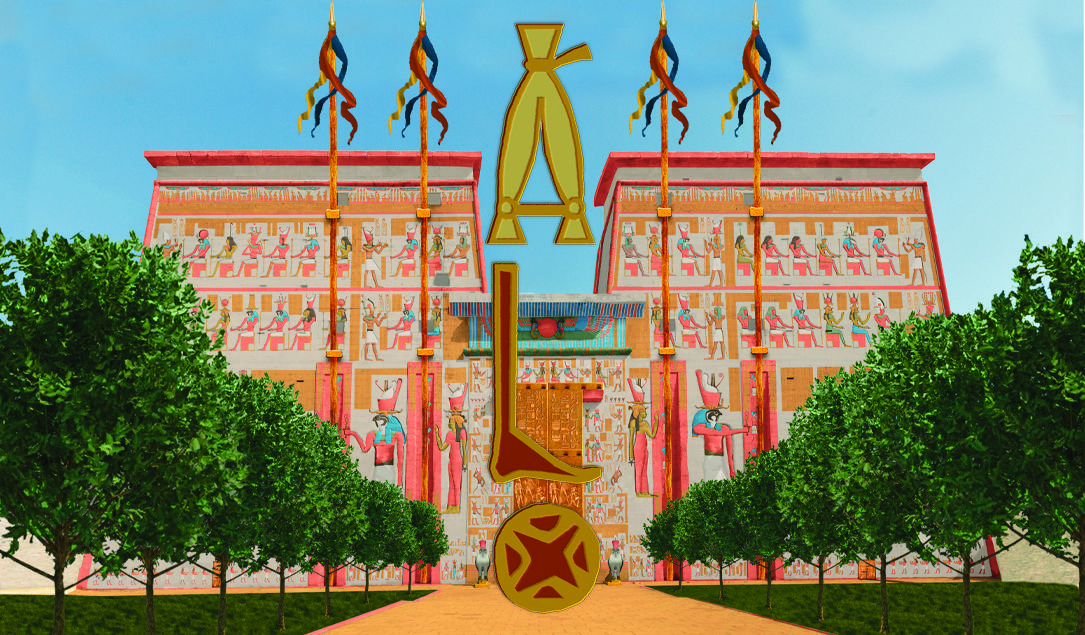
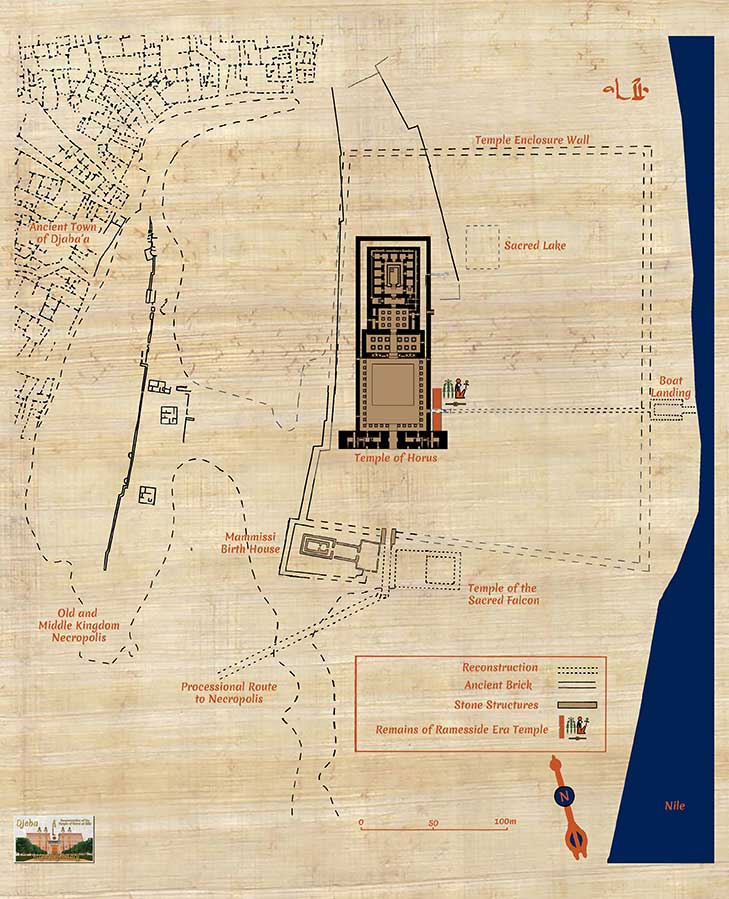
The Temple of Edfu is one of the best-preserved temples in Egypt, dedicated to Horus, the falcon-headed god. Built during the Ptolemaic Kingdom (237–57 BCE), it stands on the west bank of the Nile in Upper Egypt. The temple was buried under sand and silt for centuries until it was rediscovered in the 1860s by French archaeologist Auguste Mariette.
Architecturally, the temple features massive pylons, a hypostyle hall, and a sanctuary containing a black granite shrine dedicated to Nectanebo II. The temple’s inscriptions provide valuable insights into Egyptian mythology, including the legendary battle between Horus and Seth.
The physical temple of Horus at Edfu is the site of one of the oldest places of worship of Hr (Horus). Edfu sits in the earlier region named wTs.t Hr (The Place where Horus is extolled). It is a very prosperous town due to wTs.t Hr‘s proximity to routes to nearby gold mines in the eastern desert.
The town had both a sacred name and a secular name. Its sacred name was bHdt, meaning “great seat” or “throne”. Its secular name was DbA, meaning “float of reeds,” which alludes to its cosmogony: the float of reeds that arose from the chaos waters of nnw (Nun) and became the perch of Har. By Coptic times, the town DbA was pronounced Etbo, becoming the Arabic Edfu.
The earliest stone temple was designed by Imhotep, vizier and chief architect to Djoser (c. 2600 BCE), and a woman named xrdw-anx. Little is known of that temple, except that it was dedicated to the triad of Hr bHdty (Horus Behdety), His consort Hwt Hr (Hat Hor) of Dendera, and their son Hr smA tAwy (Horus, Uniter of the Two Lands).
Over the millennia, several Pharaohs contributed to the building of the Temple, including Sety I (1294-1279 BCE), Ramesses II (1279-1213 BCE), Ramesses III (1184-1153 BCE), and Nectanebo II (360-343 BCE). Most of what stands today is attributed to the massive temple building of Ptolemy III Euergetes II (246-222 BCE).
Work on the Ptolemaic temple began in 237 BCE. On 10 September 142 BCE, Ptolemy VIII Euergetes II and his wife Cleopatra II performed the formal dedication of the inner naos of the temple. Work continued, with greater additions made by the succeeding Pharaohs, and in 57 BCE, the pylon doors were hung, and the temple was completed.
Here are links to articles and media about the main temple’s several rooms and other significant structures in ancient DbA.
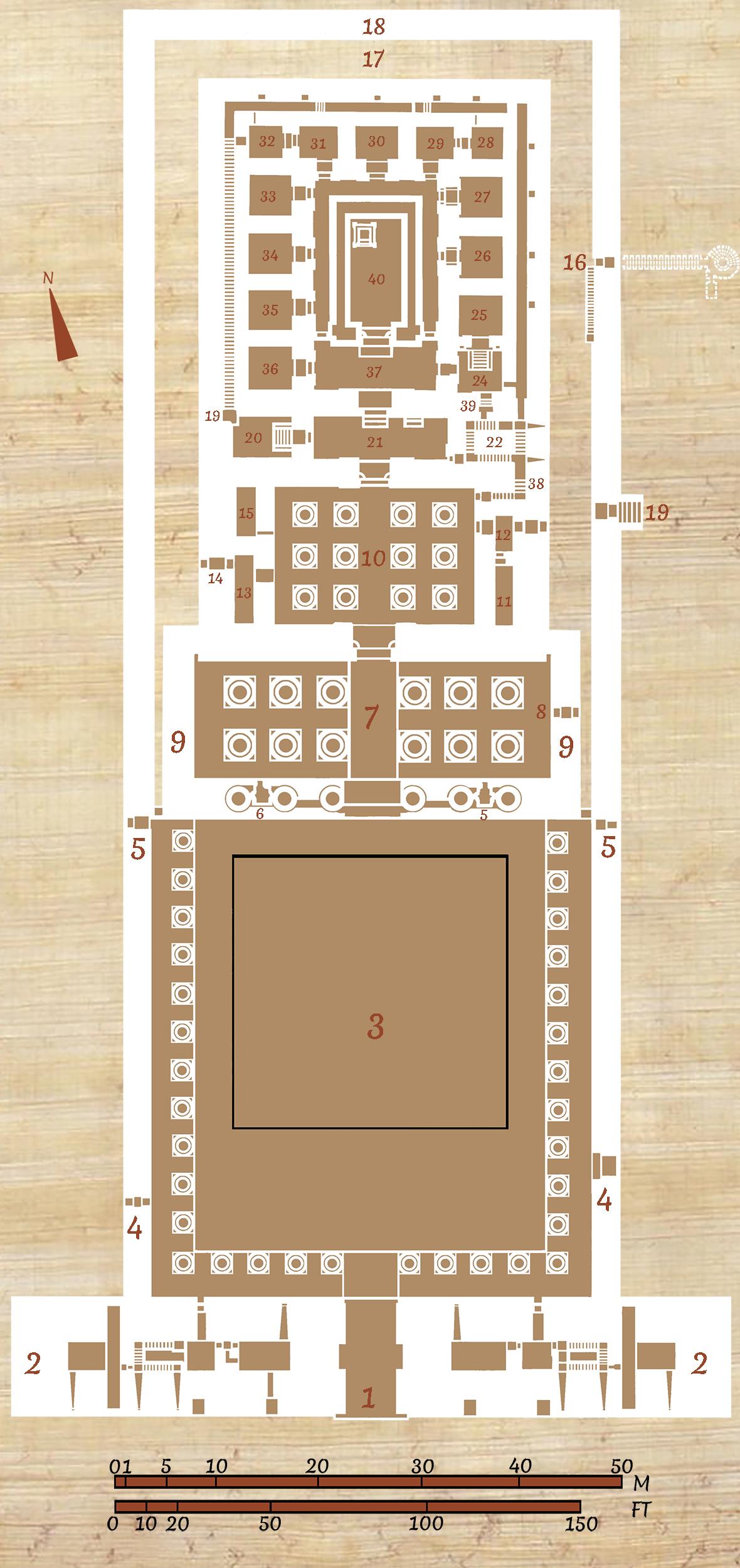
- Great Inscribed Portal
- Pylons
- Court of Offerings
- Portal of the Golden One
- Eastern Portal / Western Portal
- House of the Morning
- House of Books
- Columned Hall
- Pure Corridor
- Columned Hall Portal
- The Room of the Nile
- Portal to the Pure Corridor
- Ointment Workshop
- Great Hall
- Treasury
- Connecting Room
- Western Staircase
- Antechamber to Western Staircase
- Offering Table Hall
- Eastern Stairway
- Portal to the Sacred Lake
- Food Offerings Altar
- Pure Place
- Throne Room
- Throne of Ra
- Chapel of Hathor
- Mansion of the Leg
- Harpoon Room
- STyt – Sanctuary of Sokar
- Mansion of the Prince
- Inner Sanctuary of Sokar
- Throne of the Gods
- House of Clothing
- Chapel of mnw
- Central Hall
- Great Seat of Horus
- Connecting Staircase to the Food Offerings Altar
- Connecting Staircase to the Great Hall
- Stairway to the Pure Well
- Enclosure Wall
- Pure Corridor