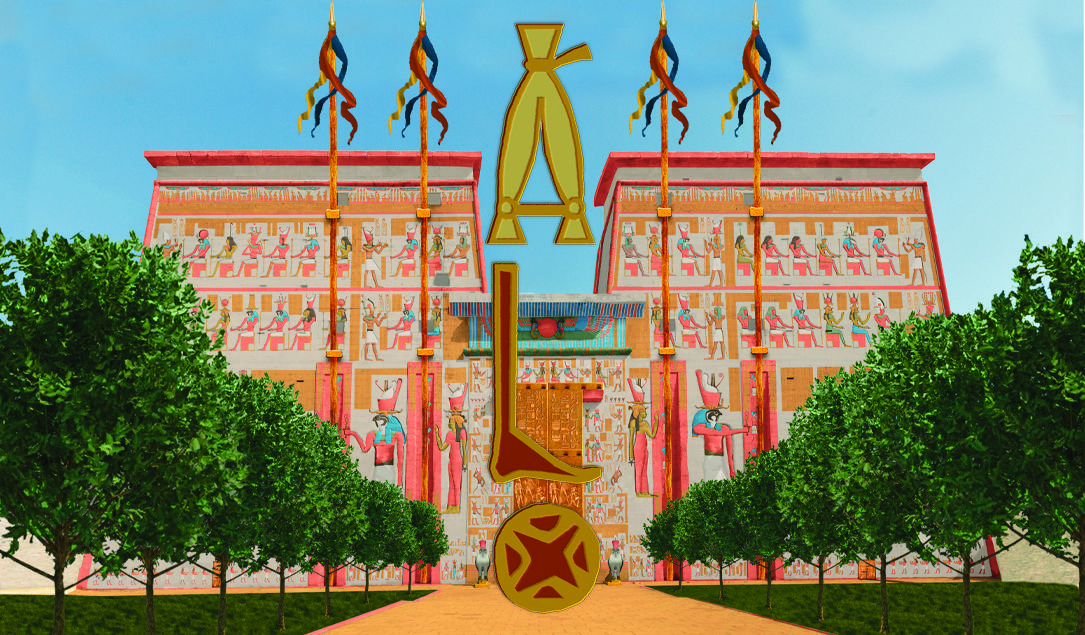
Offerings Forecourt

This perfect place, the Nome of Horus-Ra, is his horizon on earth, is the House of Appearance of His Majesty, is the Great Throne of His Ka, on which he appears and sets, in the Shrine that Protects Khepri of the quickly born child, is the place at which His body has been nourished since the First Beginning, is the Chamber of the Falcon is the Ruler’s House of the ruler, is the Tomb of the Falcon with the Dappled Plumage, is the Great Place of the greatest of the gods, is the House of the Strong One of Horus, the strong bull, is the Palace of the Revenger, who drives the hot-headed from Egypt, is the Place of Stabbing of the one who stabs the Wamamati Snake, is the Horizon of Eternity and Primeval Hill of the horizon god, is the Shrine of the divine Winged Disk.

– The Great Building Inscription of the Edfu Temple Translated by Dieter Kurth

About the Offerings Forecourt

The Offering Court at the Temple of Horus in Edfu was a significant space where worshippers could present offerings to the statue of Horus. This colonnaded courtyard was open to the public and was a gathering place for religious ceremonies. The architectural details include palm and papyrus capitals, intricate hieroglyphics, and a ten-foot-tall granite colossus of Horus, which added to the temple’s grandeur.

The Temple of Horus at Edfu, built during the Ptolemaic Kingdom (237–57 BCE), is one of the best-preserved temples in Egypt. It was constructed to honor Horus, the falcon-headed god, and features a hypostyle hall, pylons, and chapels surrounding the sanctuary. Over time, the temple was buried under desert sand and Nile silt, but it was rediscovered in the 19th century.

The Forecourt, or Offerings Forecourt, as it was called, is where the general population gathered to attain favors from Horus and where the temple festivals were held. There are thirty-two columns in the Forecourt’s colonnades, twelve on each west and east sides, and eight on the south side next to the pylon gateway. Carved on these columns are reliefs of Ptolemaic pharaohs making offerings to local gods. The cartouches inscribed in the court are empty, where future pharaohs would have their names carved inside them. On the forecourt walls are carved reliefs of the Pharaoh making offerings to the gods and slaying enemies. Also recorded are significant events and festivals.

Image Gallery

References

https://reconstructingancientegypt.org/books/chronicle-of-the-pharaohs-the-reign-by-reign-record-of-the-rulers-and-dynasties-of-ancient-egypt/
https://reconstructingancientegypt.org/books/sacred-sites-of-ancient-egypt-an-illustrated-guide-to-the-temples-and-tombs-of-the-pharaohs/
https://reconstructingancientegypt.org/books/temple-of-edfu-a-guide-by-an-ancient-egyptian-priest/
https://reconstructingancientegypt.org/books/the-complete-temples-of-ancient-egypt/
https://reconstructingancientegypt.org/books/the-house-of-horus-at-edfu-ritual-in-an-ancient-egyptian-temple/
https://reconstructingancientegypt.org/books/the-pharaohs-of-ancient-egypt/
https://reconstructingancientegypt.org/books/the-priests-of-ancient-egypt
Djeba hieroglyphs
Click to return to the temple

Discover more from Djeba

Subscribe to get the latest posts sent to your email.

Comments

Leave a Reply