Author: Panebtawy
-
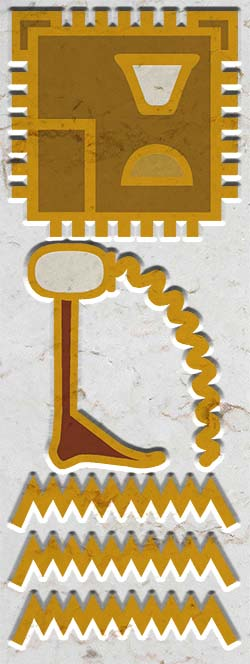
Pure Hallway
This Corridor, which is pure and leads around all this, is within the wall, which is connected with the Pylon. It is 113 cubits long and 90 cubits wide, up to the small doors that are located in it on the right and left sides of the Pronaos. There are four doors in it. Details of the places on to which the doors open: one leads eastwards and is used by the Aqi-Priests when they come back from the Sacred Lake to perform their duty; it is used to bring out offerings released (for consumption), in order to hand them out to the overseers of the chapels of He of Dappled Plumage; another one, a miraculous work, leads to the Pure Well, to the Pure Magazine and to the Slaughterhouse of Horus of the choicest cuts of meat, to get fresh pure water for the temple, and for the divine offering to the Falcon at the appropriate time; two more (doors) open right and left, and they are sited in the Pronaos and lead into the Court of Offerings.
The Great Building Inscription of the Edfu Temple Translated by Dieter Kurth
The Pure Hallway at Edfu: A Threshold of Ritual Transformation
Within the grand architectural program of the Temple of Horus at Edfu, the Pure Hallway—often identified with the wabt or purification corridor—served as one of the most essential yet understated spaces in the temple’s ritual landscape. Though less visually dramatic than the hypostyle halls or the sanctuary, this narrow transitional zone carried profound ceremonial weight. It was here that priests paused, prepared, and purified themselves before entering the increasingly sacred chambers of the god.
The Pure Hallway functioned as a liminal passage, a place where the boundaries between the ordinary and the divine were deliberately negotiated. Priests traversing this corridor underwent acts of ritual cleansing—washing, anointing, reciting formulae of purity—to ensure that no trace of disorder (isft) accompanied them into the presence of Horus. Inscriptions and reliefs along the walls reinforce this purpose, depicting purification rites, libations, and the invocation of divine protection. The space itself becomes a textual and architectural reminder that purity was not a static condition but a continual practice.
Architecturally, the hallway’s controlled lighting, narrow proportions, and directional flow guide the body and mind toward focus and reverence. It is a corridor of preparation, a place where the priesthood aligned themselves with maat, the cosmic order, before performing the daily service that sustained the god’s cult. In this way, the Pure Hallway embodies the Egyptian understanding that sacred service begins long before one reaches the sanctuary; it begins with the disciplined purification of the self.
Today, the Pure Hallway at Edfu stands as a testament to the meticulous ritual choreography of Egyptian temple life—a reminder that holiness was approached step by step, through thresholds both physical and spiritual.
-
Eastern Stairway
On the east and west sides of it (Offering Table Hall) there is a staircase by which it is possible to rise and set: this god will ascend (to the temple roof) via the Eastern Stairway, together with his Uraeus-snake, the Great One, in order to see his sun-disk (in the sky), and with His Divine Ennead following Him in order to unite with His ba’a spirit (the sun) on the day of the New Year Festival, after having descended and entered His temple chamber, by the staircase on the west side, accompanied by his great Uraeus-snake, the Mistress of Dendera, and his Divine Ennead, each one in his place, having returned satisfied and taken his place in his horizon (temple) thus fulfilling his circuit, together with them (his fellow gods), and for eternity. The flight of stairs on the west side measures 60 by 2 cubit. The eastern stairway measures 10 by 8; it has a small door in it. There is a room to the right of it, measuring 10 by 9, into which the flight of stairs on the right leads.
The Great Building Inscription of the Edfu Temple (Dieter Kurth, 2004)About the Eastern Stairway
This staircase leads from the Offering Table Hall to the roof of the temple, where the rites of the Opening of the Year – Wapat Ranapat were performed. The living statue of the god Horus was carried in procession with the other divine statues of his Ennead at the temple to see the sun at dawn of the opening of the year. Once rites are performed, the divine statues are again carried in procession down the western stairway with Hathor in her form of the uraeus and all are returned to their shrines. The eastern stairway measures 15 feet (5.334 m) by 12 feet (4.267 m). Inscribed on the walls are images of priests and the Pharaoh carrying the divine statues to the roof for the Wapat Ranapat rites.
-
House of Papyrus Rolls
House of Papyrus Rolls of Horus equipped with the ba’a spirits of Horus-Ra
Par Madja’at na Har ‘apar ma ba’w Har-R’a
The Books and the great parchments of pure leather for bringing about the overthrowing of the Evil One, the repelling of the Crocodile Seth, the blessing of the hour, the preservation of a boat, the procession of the great boat
The book for setting the Pharaoh off on procession.
The book for performing the ritual for the protection of the city, of the houses, of the White Crown, of the year.
The book for appeasing the goddess Sekhmet.
The book for hunting the lion, repelling crocodiles, driving away reptiles; knowing the secrets of the Ointment-Workshop knowing all the details about the divine offerings, all the lists of the secret forms of the god and all the aspects of the associated deities, copied for the temple day after day; one after the other, for the souls of the deities which live in this place and never leave this temple.
The book of the temple inventory.
The book of capturing enemies.
The book of combat.
The book of temple regulations.
The roll book of temple guards.
Instructions for the decoration of a wall; the protections of the body.
The book of magical protection of the Pharaoh in his palace.
Formulae for warding off the Evil Eye.
Information about the regular appearance of two stars (sun and moon) and the periodical return of the other stars.
Enumeration of all the sacred places and knowledge about what is in them.
All the rituals concerning the God leaving his temple on festival days.
The Temple of Edfu: A guide by an Ancient Egyptian Priest, Dieter KurthAbout the Par Madja’at
A small library where sacred books used frequently by the Temple were stored. The title Ba’w R’a is frequently found as a name for sacred books. According to the inscriptions on the wall, a reader-priest was on duty for twelve hours of the day. It is most likely that the main temple library called the Par ‘anakh – House of Life was a building outside the main walls of the Temple in the Temple complex, and has since been destroyed. Columned niches carved into the side walls stored the texts, and though the books themselves were never recovered, the niches were labeled with its contents.
-
Pronaos
The Pronaos comes after it, which is higher than the rooms mentioned and wider on the right and left sides: it is 40 cubits by 36, with a total height of 30 cubits, and it is most perfectly carved on its inside with reliefs. The House of the Morning and the House of Papyrus Rolls are on the right and left sides of it. There is a small door in it, facing eastwards. There are 18 perfect columns that support the [horizon (the ceiling)], just as the sky is supported under the Winged Scarab.
The Great Building Inscription of the edfu Temple Translated by Dieter KurthAbout the Pronaos
The Pronaos or Outer Hypostyle Hall is the smaller hall before The Great Hall. It is so-named Hypostyle due to the many columns that support the ceiling. The twelve columns, carved to resemble papyrus, are carved completely with beautiful reliefs, depicting offerings by Pharaohs to the gods, symbols of strength and protection, and many others. The ceiling depicts astronomical motifs beautifully painted, of which a great portion still survives. There are six columns incorporated into the southern screen wall, which stand half the height of the Pronaos. The small door mentioned in the building texts leads to the Pure Corridor. Inside the Pronaos are the doors to the rooms of the House of the Morning and the House of Papyrus . Carved on its walls are reliefs of the Foundation and the Consecration of the Temple.
References
Kurth, D. (2004). The temple of Edfu: a guide by an ancient Egyptian priest. American University in Cairo Press.
McCoy, P. A. (2019). Pictures of the Edfu Temple. Djeba – Reconstruction of the Temple of Horus at Edfu. Kamat – Reconstructing Ancient Egyptian Culture. https://djeba.org/temple.
Watterson, B. (1998). The house of Horus at Edfu: ritual in an ancient Egyptian temple. Tempus.

Click to return to the temple -
Offerings Forecourt
This perfect place, the Nome of Horus-Ra, is his horizon on earth, is the House of Appearance of His Majesty, is the Great Throne of His Ka, on which he appears and sets, in the Shrine that Protects Khepri of the quickly born child, is the place at which His body has been nourished since the First Beginning, is the Chamber of the Falcon is the Ruler’s House of the ruler, is the Tomb of the Falcon with the Dappled Plumage, is the Great Place of the greatest of the gods, is the House of the Strong One of Horus, the strong bull, is the Palace of the Revenger, who drives the hot-headed from Egypt, is the Place of Stabbing of the one who stabs the Wamamati Snake, is the Horizon of Eternity and Primeval Hill of the horizon god, is the Shrine of the divine Winged Disk.
– The Great Building Inscription of the Edfu Temple Translated by Dieter Kurth
About the Offerings Forecourt
The Offering Court at the Temple of Horus in Edfu was a significant space where worshippers could present offerings to the statue of Horus. This colonnaded courtyard was open to the public and was a gathering place for religious ceremonies. The architectural details include palm and papyrus capitals, intricate hieroglyphics, and a ten-foot-tall granite colossus of Horus, which added to the temple’s grandeur.
The Temple of Horus at Edfu, built during the Ptolemaic Kingdom (237–57 BCE), is one of the best-preserved temples in Egypt. It was constructed to honor Horus, the falcon-headed god, and features a hypostyle hall, pylons, and chapels surrounding the sanctuary. Over time, the temple was buried under desert sand and Nile silt, but it was rediscovered in the 19th century.
The Forecourt, or Offerings Forecourt, as it was called, is where the general population gathered to attain favors from Horus and where the temple festivals were held. There are thirty-two columns in the Forecourt’s colonnades, twelve on each west and east sides, and eight on the south side next to the pylon gateway. Carved on these columns are reliefs of Ptolemaic pharaohs making offerings to local gods. The cartouches inscribed in the court are empty, where future pharaohs would have their names carved inside them. On the forecourt walls are carved reliefs of the Pharaoh making offerings to the gods and slaying enemies. Also recorded are significant events and festivals.
Image Gallery
References

Click to return to the temple