Tag: Horus

  • Columned Hall

    Columned Hall

    The Collumned Hall comes after it, which is higher than the rooms mentioned and wider on the right and left sides: it is 40 cubits by 36, with a total height of 30 cubits, and it is most perfectly carved on its inside with reliefs. The House of the Morning and the House of Papyrus Rolls are on the right and left sides of it. There is a small door in it, facing eastwards. 18 perfect columns support the [horizon (the ceiling)], just as the sky is supported under the Winged Scarab.

    – The Great Building Inscription of the Edfu Temple Translated by Dieter Kurth

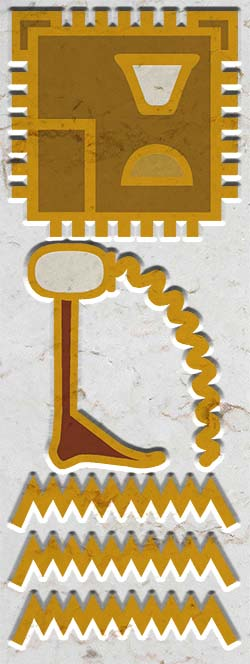
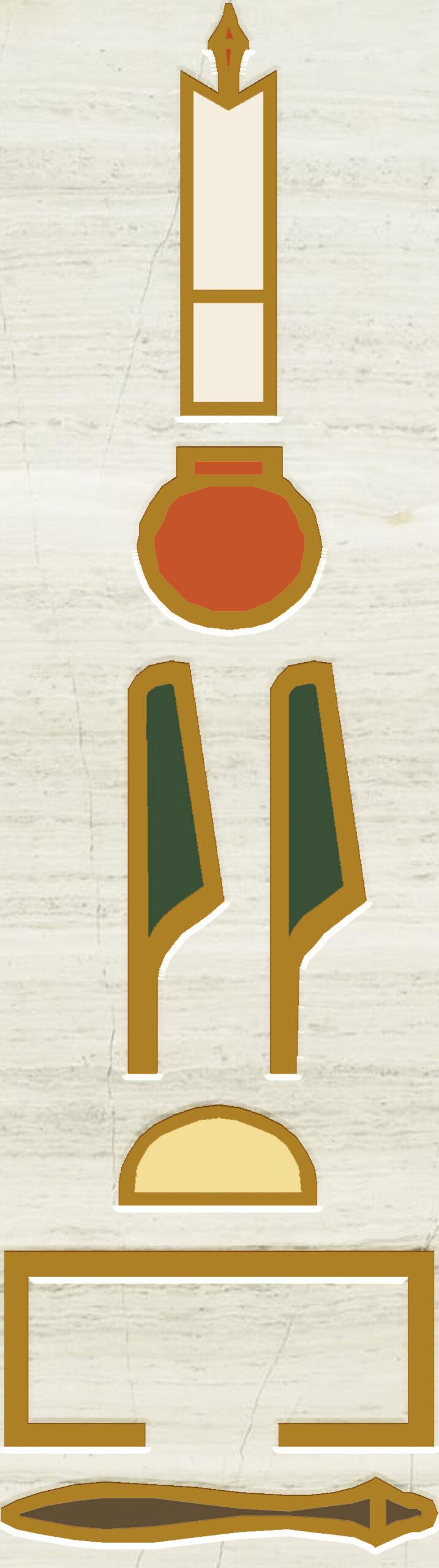
    wAxy Columned Hall

    About the Columned Hall

    The Outer Hypostyle Hall at the Temple of Horus in Edfu, known in Egyptian as the “hall in front of the sanctuary” (equivalent to the Greek pronaos), is a grand space supported by massive columns. These columns have capitals decorated in elaborate composite styles, symbolizing the lush vegetation of the Nile swamps. The colossal roof slabs rest upon these columns, creating an imposing architectural feature.

    On one side of the hall is a small room known as the pr dwAt House of the Morning, where the king underwent ritual purification before entering the temple proper. Opposite this, there is another small room representing the temple library. A notable feature of the hall is a depiction of the king in the twA-p.t pose, where he raises his arms in a gesture reenacting the moment of creation, when the god Shu lifted the heavens from the earth, establishing order and dispelling chaos.

    The Columned Hall or Outer Hypostyle Hall is the smaller hall before the Great Hall. It is so named, the Hypostyle, due to the many columns that support the ceiling. The twelve columns, carved to resemble papyrus, are entirely covered with beautiful reliefs depicting offerings by kings to the gods, symbols of strength and protection, and more. The ceiling depicts beautifully painted astronomical motifs, and a significant portion still survives. Six columns are incorporated into the southern screen wall, which stand half the height of the Pronaos. The small door mentioned in the building texts leads to the Pure Corridor. Inside the Pronaos are the House of the Morning and the House of Papyrus Rolls. Carved on its walls are reliefs of the Foundation and the Consecration of the Temple.

    The massive columns in the hypostyle hall represent the primordial swamp from which creation emerged. Their capitals are decorated with floral motifs, evoking the lush vegetation of the Nile and the life-giving forces of nature.

    Gallery

    References

    https://reconstructingancientegypt.org/the-transcription-of-the-waxy-hall-in-p-westcar-2
    https://reconstructingancientegypt.org/books/temple-of-edfu-a-guide-by-an-ancient-egyptian-priest
    https://reconstructingancientegypt.org/books/chronicle-of-the-pharaohs-the-reign-by-reign-record-of-the-rulers-and-dynasties-of-ancient-egypt
    https://reconstructingancientegypt.org/books/sacred-sites-of-ancient-egypt-an-illustrated-guide-to-the-temples-and-tombs-of-the-pharaohs
    https://reconstructingancientegypt.org/books/the-complete-temples-of-ancient-egypt
    https://reconstructingancientegypt.org/books/the-house-of-horus-at-edfu-ritual-in-an-ancient-egyptian-temple
    https://reconstructingancientegypt.org/books/the-pharaohs-master-builders
  • Pure Hallway

    Pure Hallway

    This Corridor, which is pure and leads around all this, is within the wall, which is connected with the Pylon. It is 113 cubits long and 90 cubits wide, up to the small doors that are located in it on the right and left sides of the Pronaos. There are four doors in it. Details of the places on to which the doors open: one leads eastwards and is used by the Aqi-Priests when they come back from the Sacred Lake to perform their duty; it is used to bring out offerings released (for consumption), in order to hand them out to the overseers of the chapels of He of Dappled Plumage; another one, a miraculous work, leads to the Pure Well, to the Pure Magazine and to the Slaughterhouse of Horus of the choicest cuts of meat, to get fresh pure water for the temple, and for the divine offering to the Falcon at the appropriate time; two more (doors) open right and left, and they are sited in the Pronaos and lead into the Court of Offerings.

    The Great Building Inscription of the Edfu Temple Translated by Dieter Kurth

    The Pure Hallway at Edfu: A Threshold of Ritual Transformation

    Within the grand architectural program of the Temple of Horus at Edfu, the Pure Hallway—often identified with the wabt or purification corridor—served as one of the most essential yet understated spaces in the temple’s ritual landscape. Though less visually dramatic than the hypostyle halls or the sanctuary, this narrow transitional zone carried profound ceremonial weight. It was here that priests paused, prepared, and purified themselves before entering the increasingly sacred chambers of the god.

    The Pure Hallway functioned as a liminal passage, a place where the boundaries between the ordinary and the divine were deliberately negotiated. Priests traversing this corridor underwent acts of ritual cleansing—washing, anointing, reciting formulae of purity—to ensure that no trace of disorder (isft) accompanied them into the presence of Horus. Inscriptions and reliefs along the walls reinforce this purpose, depicting purification rites, libations, and the invocation of divine protection. The space itself becomes a textual and architectural reminder that purity was not a static condition but a continual practice.

    Architecturally, the hallway’s controlled lighting, narrow proportions, and directional flow guide the body and mind toward focus and reverence. It is a corridor of preparation, a place where the priesthood aligned themselves with maat, the cosmic order, before performing the daily service that sustained the god’s cult. In this way, the Pure Hallway embodies the Egyptian understanding that sacred service begins long before one reaches the sanctuary; it begins with the disciplined purification of the self.

    Today, the Pure Hallway at Edfu stands as a testament to the meticulous ritual choreography of Egyptian temple life—a reminder that holiness was approached step by step, through thresholds both physical and spiritual.


    • Pure Corridor
    • Pure Corridor
    • Pure Corridor
    • Pure Corridor
    • Pure Corridor
    • Pure Corridor
    • Pure Corridor
    • Pure Corridor
    • Pure Corridor
    • Pure Corridor
    • Pure Corridor
    • Pure Corridor
    • Pure Corridor
    • Pure Corridor
    • Pure Corridor
    • Pure Corridor
    • Pure Corridor
    • Pure Corridor
    • Pure Corridor
    • Pure Corridor
    • Pure Corridor
    • Pure Corridor
    • Pure Corridor
    • Pure Corridor
    • Pure Corridor

  • Pronaos

    The Pronaos comes after it, which is higher than the rooms mentioned and wider on the right and left sides: it is 40 cubits by 36, with a total height of 30 cubits, and it is most perfectly carved on its inside with reliefs. The House of the Morning and the House of Papyrus Rolls are on the right and left sides of it. There is a small door in it, facing eastwards. There are 18 perfect columns that support the [horizon (the ceiling)], just as the sky is supported under the Winged Scarab.

    The Great Building Inscription of the edfu Temple Translated by Dieter Kurth

    About the Pronaos

    The Pronaos or Outer Hypostyle Hall is the smaller hall before The Great Hall. It is so-named Hypostyle due to the many columns that support the ceiling. The twelve columns, carved to resemble papyrus, are carved completely with beautiful reliefs, depicting offerings by Pharaohs to the gods, symbols of strength and protection, and many others. The ceiling depicts astronomical motifs beautifully painted, of which a great portion still survives. There are six columns incorporated into the southern screen wall, which stand half the height of the Pronaos. The small door mentioned in the building texts leads to the Pure Corridor. Inside the Pronaos are the doors to the rooms of the House of the Morning and the House of Papyrus . Carved on its walls are reliefs of the Foundation and the Consecration of the Temple.

    References

    Kurth, D. (2004). The temple of Edfu: a guide by an ancient Egyptian priest. American University in Cairo Press.

    McCoy, P. A. (2019). Pictures of the Edfu Temple. Djeba – Reconstruction of the Temple of Horus at Edfu. Kamat – Reconstructing Ancient Egyptian Culture. https://djeba.org/temple.

    Watterson, B. (1998). The house of Horus at Edfu: ritual in an ancient Egyptian temple. Tempus.

    Djeba hieroglyphs
    Click to return to the temple
  • Great Hall

    Great Hall

    Map of the Great Hall

    The Great Hall is in front of it (the Naos) : it has twelve columns, great supports, wonderful to behold. The hall is 37 (cubits) long and 26 wide. Its walls are most perfectly decorated: it is called Place of Pleasure. It is also known as Place of Joy and Place of Enjoyment of Ra and Horus, for it resembles the Chemmis (papyrus thicket) of their son (Horus, Uniter of the Two Lands).

    – The Great Building Inscription of the edfu Temple Translated by Dieter Kurth

    About The Great Hall

    The Great Hall, and those halls and chapels beyond it, make up the original nucleus of the temple, or the Naos. The Great Court has twelve free-standing columns, more slender than those in the Pronaos, and the lower part of the columns being more slender. The Great Court had several names (above), and as the names indicate, The great Hall is the place where the gods enjoy themselves. On the west side of the Hall, the rooms of the ointment-workshop, and Room of the Nile. To the east of the Hall, the Treasury, and a stairway leading to the roof of the Naos.

    Djaba' Hieroglyphs
    Click to return to the Temple